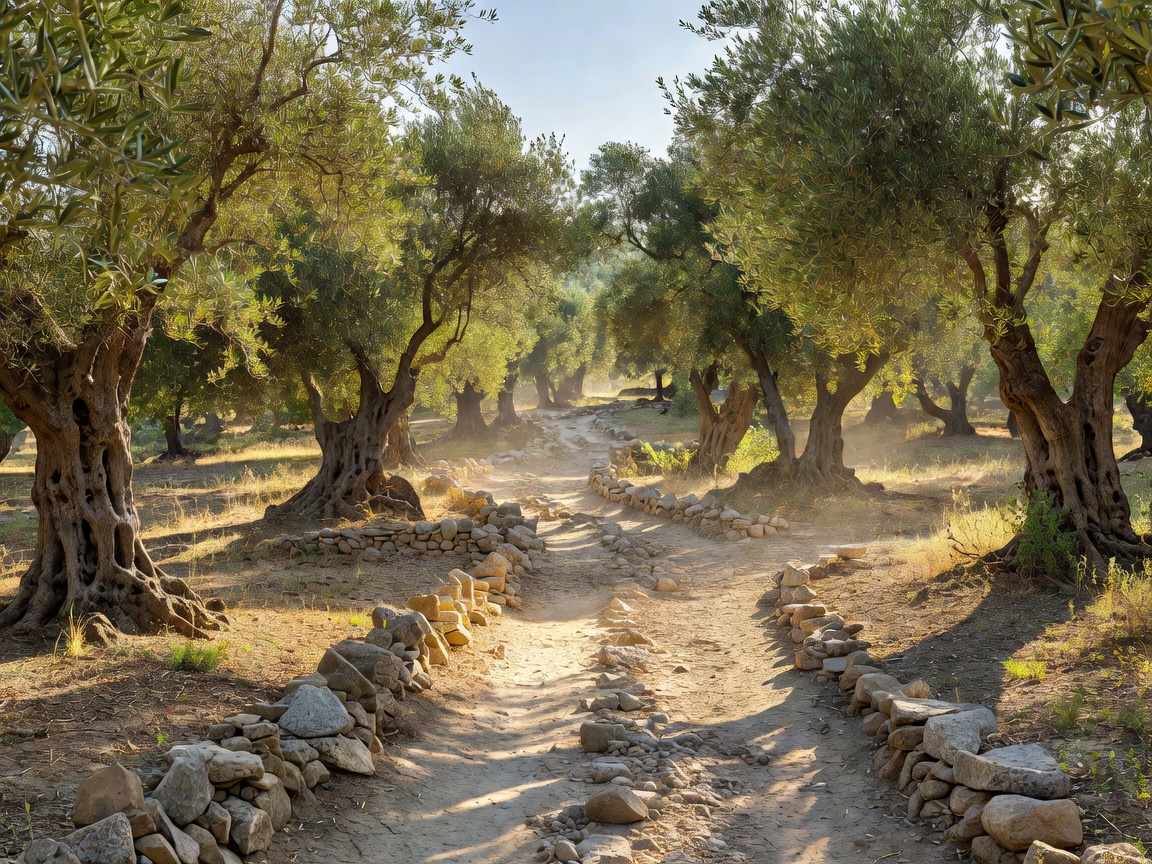
Read the landscape first
Mediterranean olive-growing areas range from coastal plains to steep inland terraces. A flat grove may support easier vehicle access and mechanised work. A terraced hillside may show older walls, narrow paths and more manual handling. Neither setting is automatically more authentic. They reveal different agricultural constraints.
Look for drainage channels, ground cover, pruning patterns and the relationship between trees and nearby buildings. These details explain how water, labour and access are managed. A farm visit is most useful when the landscape is treated as working infrastructure, not scenery.
What a grove visit can include
A visitor route may involve a guided walk, an explanation of pruning, seasonal observations or a discussion of local varieties. Availability varies by property and by time of year. Do not assume an olive farm is open to unscheduled visitors. Confirm access, walking surfaces, language, weather policy and whether the visit is educational, commercial or private.
- Wear closed shoes with grip. Paths can be uneven.
- Carry water and sun protection in exposed terrain.
- Ask before touching trees, tools, fruit or stored materials.
- Keep dogs and vehicles within the limits set by the operator.
Regional differences to notice
Coastal groves can show wind exposure and lower relief. Inland sites may have sharper temperature changes and later access after rain. Higher ground often brings steeper walking and a different harvest rhythm. Variety also matters, but regional variety names should be treated carefully: the same broad style can be used differently by growers, and a label alone does not explain the finished oil.
Traditional practices may include dry-stone terrace maintenance, mixed grazing, hand pruning or collecting fruit from the ground. Modern farms may use ground covers, irrigation systems and mechanical harvesting. A route can include both. Compare the decisions, not a simple old-versus-new ranking.
Choose a route with a clear purpose
For a walking-focused day, prioritise terrain, shade and path quality. For an agricultural learning day, ask who explains the farm system and how much time is spent outside. For a harvest-season visit, confirm whether visitors can safely observe activity without entering operational areas. Harvest work is time-sensitive and may change at short notice.
| Before travel | Check |
|---|---|
| Access | Appointment, language, walking conditions and weather policy |
| Season | Pruning, flowering, fruit development or harvest activity |
| Conduct | Photography, pets, children, food and restricted areas |
| Route fit | Time, shade, transport and onward mill or tasting plans |
The advantage of a farm route is context. The drawback is variability: rural access, weather and working priorities may limit what can be seen. Plan a flexible day and verify current details directly with the relevant property. This guide does not list farms or claim that any particular farm accepts visitors.
Next step: connect the grove to production with the mill experiences guide, then use route planning to sequence the day.